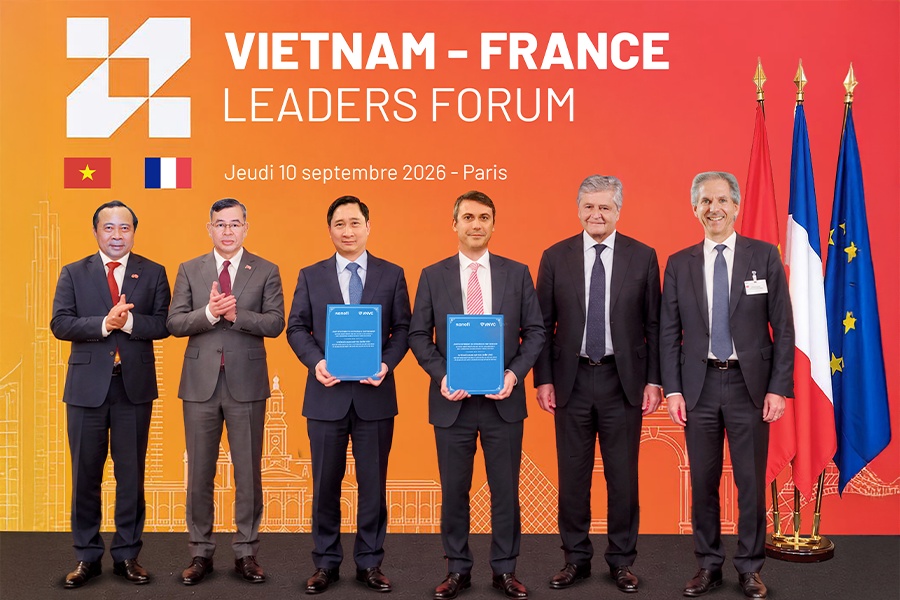
Vietnam Vaccine Joint Stock Company (VNVC) and pharmaceutical group Sanofi (France) exchange a Joint Statement on cooperation to manufacture three next-generation vaccines, a first in Vietnam

Paris, September 10, 2026 – Within the framework of the Vietnam–France Business Forum, pharmaceutical group Sanofi (France) and Vietnam Vaccine Joint Stock Company (VNVC) reported positive progress in implementing their cooperation on next-generation vaccine manufacturing, a first in Southeast Asia. The two sides also signed a Joint Statement officially announcing that priority will be given to manufacturing three of the most important next-generation vaccines for children and adults.
In his keynote remarks on the Vietnam–France cooperation strategy, General Secretary and President To Lam emphasized four key strategic directions for the new phase, including preventive healthcare and biotechnology as priority areas. Accordingly, cooperation frameworks need to be translated into concrete projects, products, and practical value, helping to raise Vietnam–France economic relations to new heights.
Heeding the guidance of the Party and the Government on the importance of the strategic cooperative relationship between Vietnam and France, Minister of Finance Ngo Van Tuan affirmed that, as the global economy undergoes a major transformation, the two countries have many opportunities to expand cooperation in strategic, high-value-added sectors, particularly science and technology, finance, industry, infrastructure, energy, and innovation.
At the working session with corporations and enterprises, reporting to General Secretary and President To Lam and French President Emmanuel Macron, Mr. Ngo Chi Dung, Chairman of the Board of Directors and General Director of Vietnam Vaccine Joint Stock Company (VNVC), was pleased to note an important achievement: VNVC and Sanofi have reached an agreement to manufacture next-generation vaccines at the VNVC Vaccine and Biological Manufacturing Plant, making Vietnam the first country in Southeast Asia capable of manufacturing these next-generation vaccines on its own.
The project is currently being actively implemented, with major investments that meet high international standards for pharmaceutical and vaccine manufacturing. Under the plan, construction of the Plant will be completed in 2027, manufacturing will begin in 2028, and commercialization is expected from 2029. The goal is to supply tens of millions of vaccine doses each year to Vietnam, then to the region, and to participate in the global supply chain. Mr. Dung also emphasized his hope that the project will continue to receive the support of the governments of both countries, thereby ensuring that it stays on schedule and is implemented successfully, and soon bringing high-quality vaccines at low cost to people nationwide. The success of the project in Vietnam will pave the way for Sanofi vaccines “Made in Vietnam” to reach countries in Southeast Asia, as well as to be ready to join the global vaccine supply chain.

Mr. Stephen Alix, Head of Vaccines International, Sanofi, said that Sanofi highly values the directions of the Party and the Government of Vietnam in promoting science and technology, innovation, and high-technology industrial development, and in strengthening the healthcare system's capacity for self-reliance. “Through this project, Sanofi hopes to make a practical contribution to the country's goals and help build an increasingly modern biotechnology ecosystem in Vietnam,” said Mr. Stephen Alix.
Within the framework of the Forum, in the presence of senior leaders of the two countries, Sanofi (France) and VNVC (Vietnam) exchanged the Joint Statement, officially announcing that priority will be given to manufacturing three of the most important next-generation vaccines for children and adults at the VNVC Vaccine and Biological Manufacturing Plant.
The three vaccines prioritized for manufacturing are a 6-in-1 vaccine with an acellular pertussis component, a seasonal influenza vaccine, and a meningococcal vaccine. These are essential vaccines, in high demand in Vietnam, that prevent many dangerous diseases with a high risk of transmission and death across many age groups, from young children and adolescents to adults and older adults.
These next-generation vaccines have also been identified as strategic technology products under a Government decision. Promoting domestic manufacturing is therefore important for developing Vietnam's modern vaccine and pharmaceutical industry, increasing the ability to proactively meet the breakthrough development needs of the healthcare sector, and progressively enhancing Vietnam's position in the global biotechnology value chain.
The cooperation between Sanofi and VNVC is a landmark in the Vietnam–France Comprehensive Strategic Partnership in the fields of healthcare and pharmaceuticals. This event helps translate into practice the major directions set out in Politburo Resolutions No. 57, No. 68, and No. 72 on breakthroughs in science and technology development and on promoting the role of the private sector, specifically in the fields of disease prevention and the care and improvement of public health.
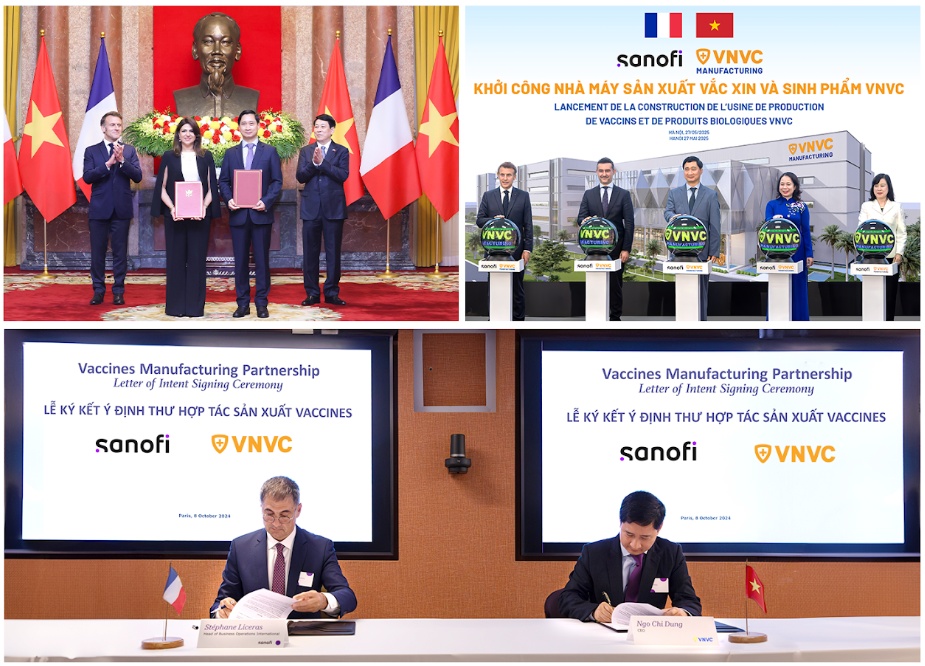
The VNVC Vaccine and Biological Manufacturing Plant in Tay Ninh Province has a first-phase investment of more than VND 2.5 trillion, covers more than 26,000 m², and has a design capacity of approximately 120 million vaccine doses per year. Investment in the Plant is directed toward meeting the WHO-GMP, EU-GMP, and FDA-cGMP international standards and developing capabilities in the research, technology acquisition, manufacturing, and quality testing of high-technology vaccines and biologics in Vietnam.
VNVC has signed a contract with Syntegon Group (Germany) to invest in a high-capacity vaccine manufacturing line incorporating automation and advanced aseptic technology.
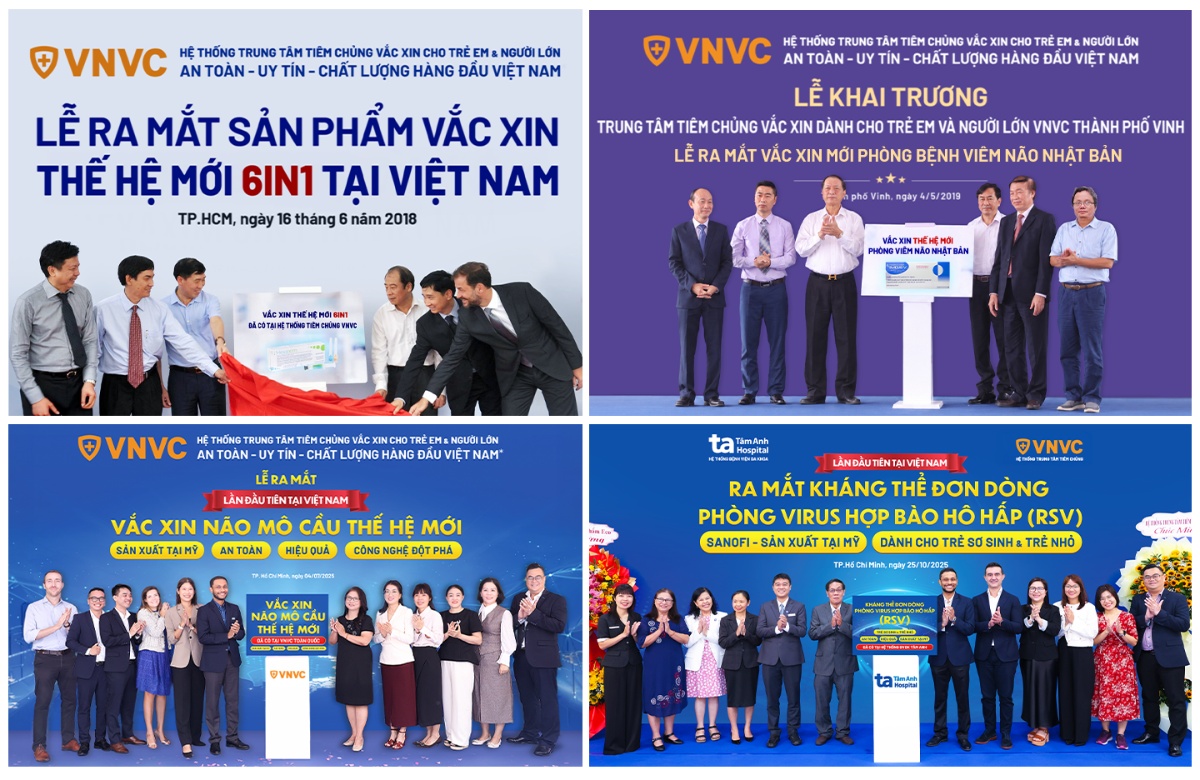
Alongside Sanofi, VNVC has also expanded cooperation with many international corporations, organizations, and research institutes in the fields of vaccines, biologics, and biotechnology, such as Pfizer (US), GSK (UK), the Russian Direct Investment Fund (RDIF), the Gamaleya National Research Center for Epidemiology and Microbiology, Binnopharm, and Medsintez (Russia). These cooperation programs focus on research, technology transfer, human resource training, sharing manufacturing experience, and progressively building capabilities in new vaccine and biologics technologies.

Simultaneous investment in technology infrastructure, together with human resource development and expanded cooperation with international manufacturers and research institutes, lays the foundation for Vietnam to progressively establish domestic high-technology vaccine manufacturing capacity, acquire new technologies, expand its product portfolio, and develop its vaccine and biologics industry in line with a long-term direction.


OTHER ARTICLES
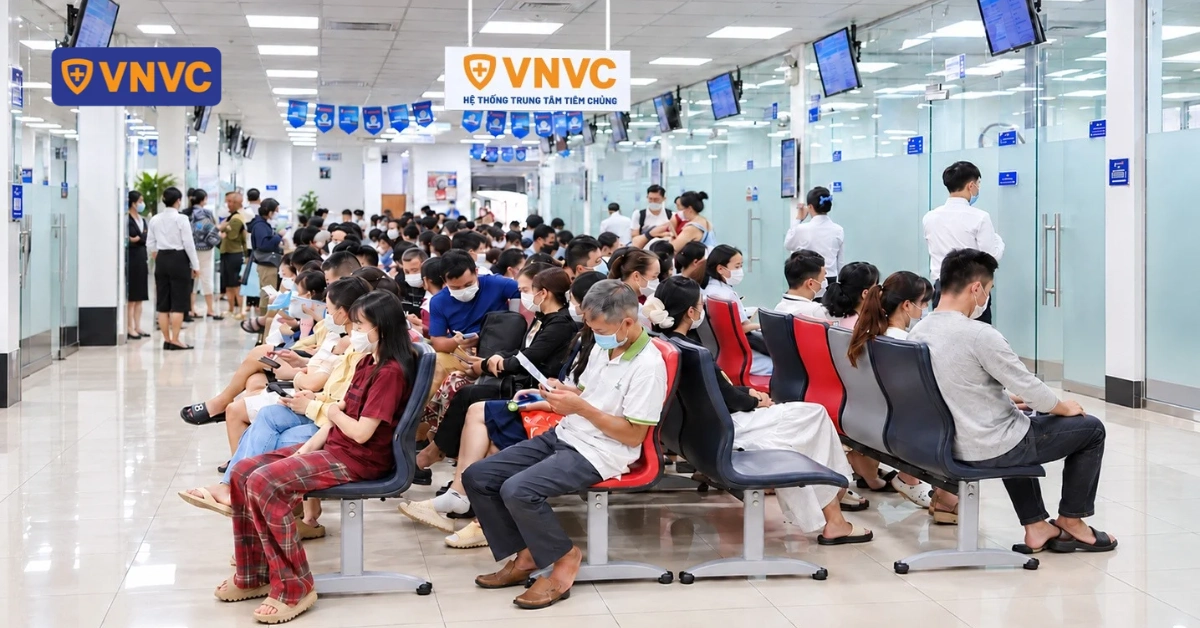
VNVC Promptly Administers Nearly 40,000 Meningococcal Vaccine Doses in Four Days, Scaling Up Across Its Entire Network to Meet Disease Prevention Needs
Amid successive clusters of meningococcal cases at schools in Ho Chi Minh City, which have already resulted in a student’s death, demand for preventive vaccination has risen...
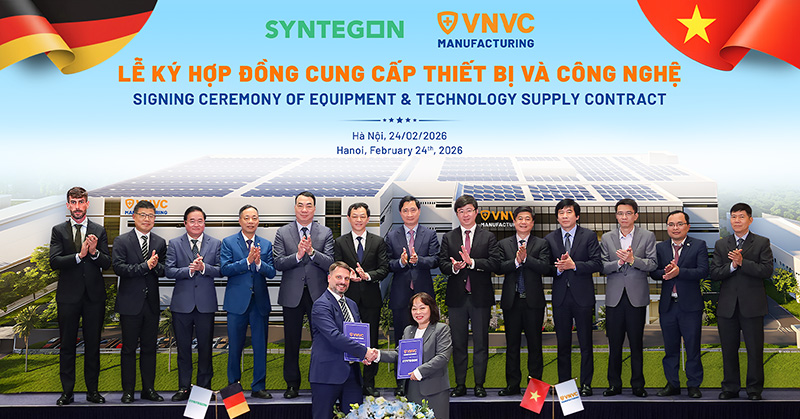
VNVC Vaccine and Biological Manufacturing Plant signs contract to purchase one of the world’s most advanced vaccine manufacturing lines
On February 24 in Hanoi — In the presence of Deputy Minister of Health Nguyen Tri Thuc and Deputy Minister of Science and Technology Bui Hoang Phuong,...
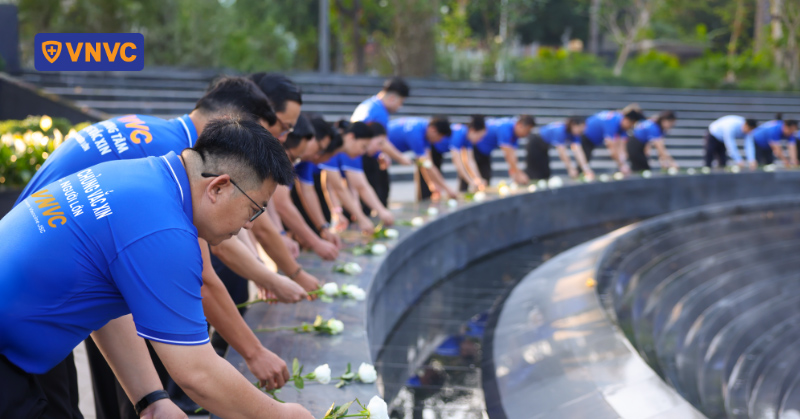
VNVC Commemorates COVID-19 Victims at the “Teardrop” Monument on the 5th Anniversary of Bringing the First COVID-19 Vaccines to Vietnam
VNVC held a floral offering ceremony at the "Teardrop" Monument to commemorate people, officers, soldiers, and frontline forces who lost their lives to COVID-19, and to remind...

VNVC is a leading vaccination system in Southeast Asia
On April 18 in Singapore, the VNVC Vaccination System was honored as the No. 1 Vaccination System in ASEAN 2026, while also receiving two major awards: “ASEAN...
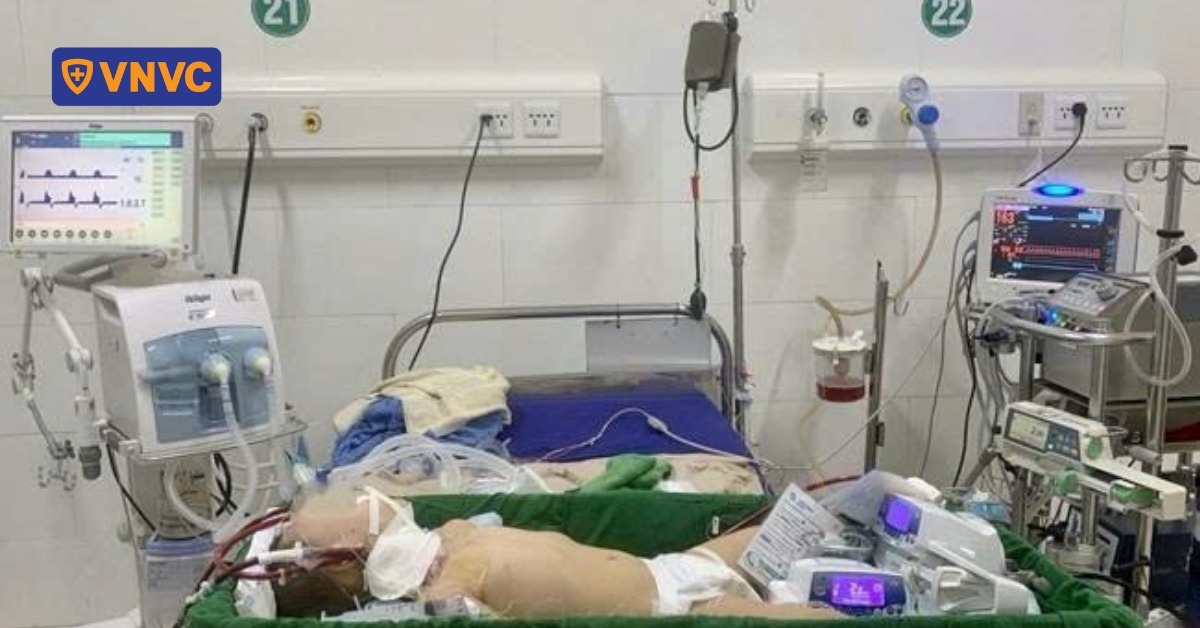
Understanding the burden of respiratory diseases in young children and comprehensive protection strategies from the earliest days of life
More than 70% of hospitalizations due to respiratory syncytial virus (RSV) occur within the first 6 months of life; pneumococcus accounts for approximately 50% of deaths from...
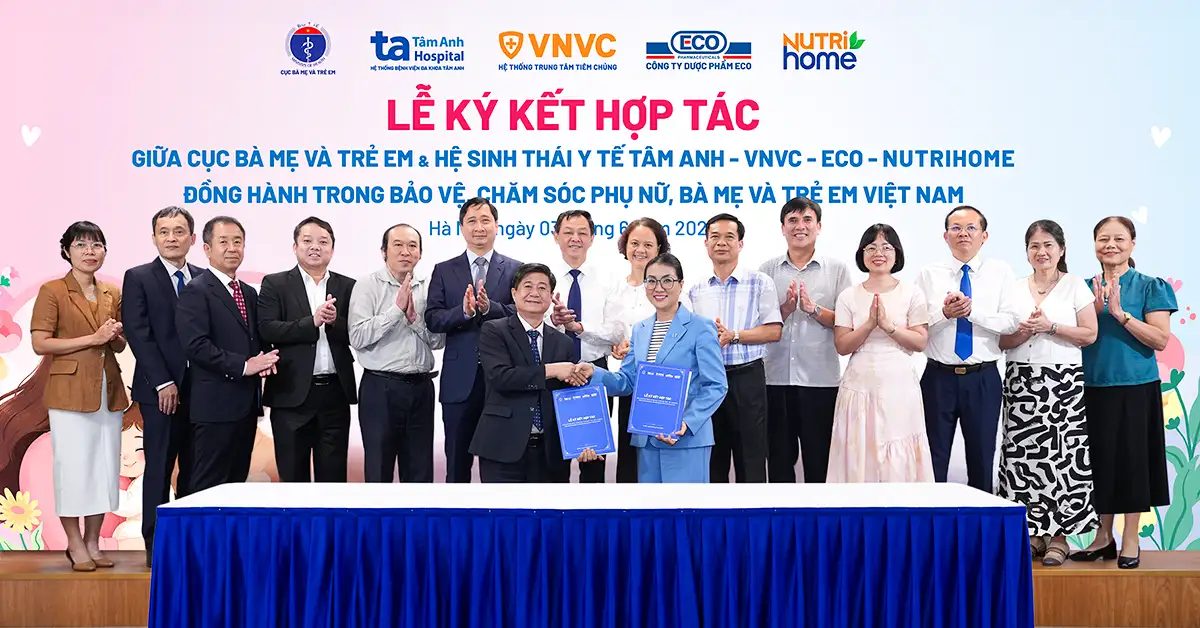
The Tam Anh – VNVC Healthcare Ecosystem signs a cooperation agreement with the Administration of Maternal and Children’s Affairs (Ministry of Health) to strengthen comprehensive health protection for Vietnamese women and children
On June 3, 2026, in Hanoi, the Administration of Maternal and Children's Affairs (Ministry of Health) and the Healthcare Ecosystem comprising Tam Anh General Hospital, VNVC Vaccination...